Models Published:
Mistral releases Timestral, time-series forecasting models from 5M to 209M parameters that run on a CPU
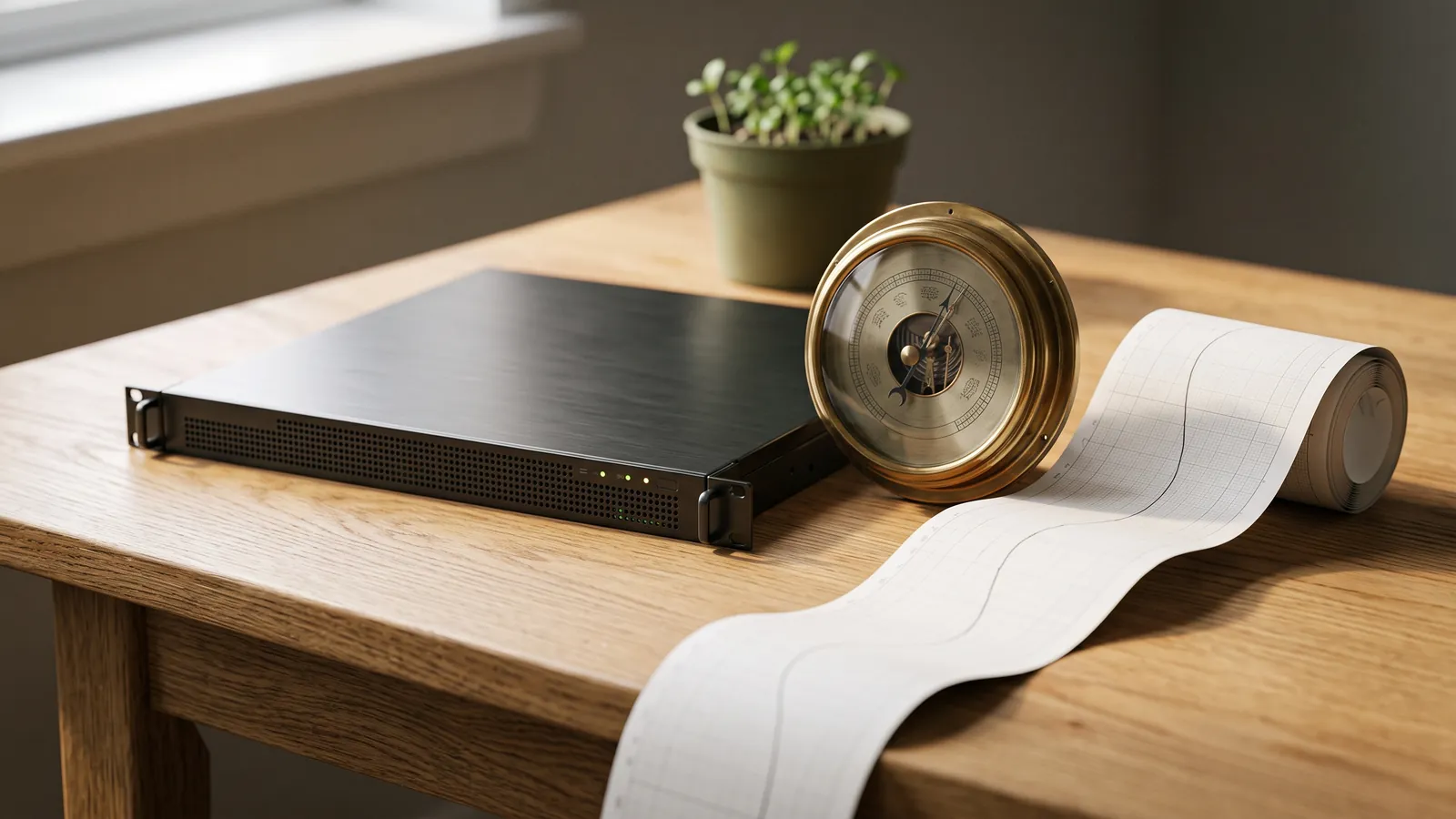
What happened
Mistral released Timestral on October 15, its first family of time-series foundation models, in four sizes of 5M, 28M, 123M and 209M parameters under a modified MIT licence, with weights on Hugging Face. The models give probabilistic, multivariate forecasts and accept past-only and known-future covariates, including categorical ones such as a machine's state. Mistral says the 209M model ranks first among zero-shot models on GIFT-Eval, TIME and fev-bench. No GPU is needed: on an 8-thread server CPU, a one-day forecast from three weeks of 15-minute data takes 10 ms with the 5M model and 140 ms with the 209M model, according to Mistral.
Why it matters locally: Forecasting sensor, sales or capacity data can now run on the servers a company already has, with no graphics card and no data leaving the building.
Three ways to read it
For the market
Mistral is moving beyond chat into the numbers side of enterprise data, where models such as TimesFM, Chronos and Falcon already compete; Mistral says its 209M model beats TimesFM-3 and Falcon-2.0 with fewer parameters. Because the models run on CPUs and can be deployed on-prem or air-gapped, they likely appeal to factories and finance teams that cannot send operational data to a cloud.
In plain words
Timestral looks at a history of numbers, such as a machine's temperature every 15 minutes, and predicts what comes next along with how sure it is. It is like a weather forecast for your own data, and it is small enough to run on an ordinary office server.
For practitioners
Start with the 123M model, which Mistral says comes within 0.2% of the 209M score at three quarters of its latency, or the 28M model where speed matters more. Read the modified MIT licence terms on the model card before production use, and compare zero-shot results with your current ARIMA or PatchTST baseline on your own series before switching; fine-tuning is offered through Mistral Forge.
Sprout's insight
Sprout compares this with other brands and with where real applications are heading. Free for members.
Sign in free to read it →Subscribe to Sprout's weekly
One email a week: the top stories and a taste of Sprout’s insights. Unsubscribe any time.
Source
Read the official source: Introducing Timestral (Mistral AI) ↗Summaries are written by OnPrem World from the official source. We link to the original and never republish it.
More news
- vLLM v0.32 brings 4-bit KV cache to more GPUs and stops allowing every CORS origin by default
- DeepSeek-V4.1-Flash-1017: a same-size update with better agent scores and shorter answers
- Open WebUI 0.12.3 adds end-to-end encrypted chats and one search box for the whole workspace
- llama.cpp v0.7.0 adds a GPU cache for offloaded MoE experts and moves the server to port 9931
- Ollama 0.40.5 adds NVIDIA Nemotron 3.5 Super and the 24 GB Nemotron 3.5 Bolt